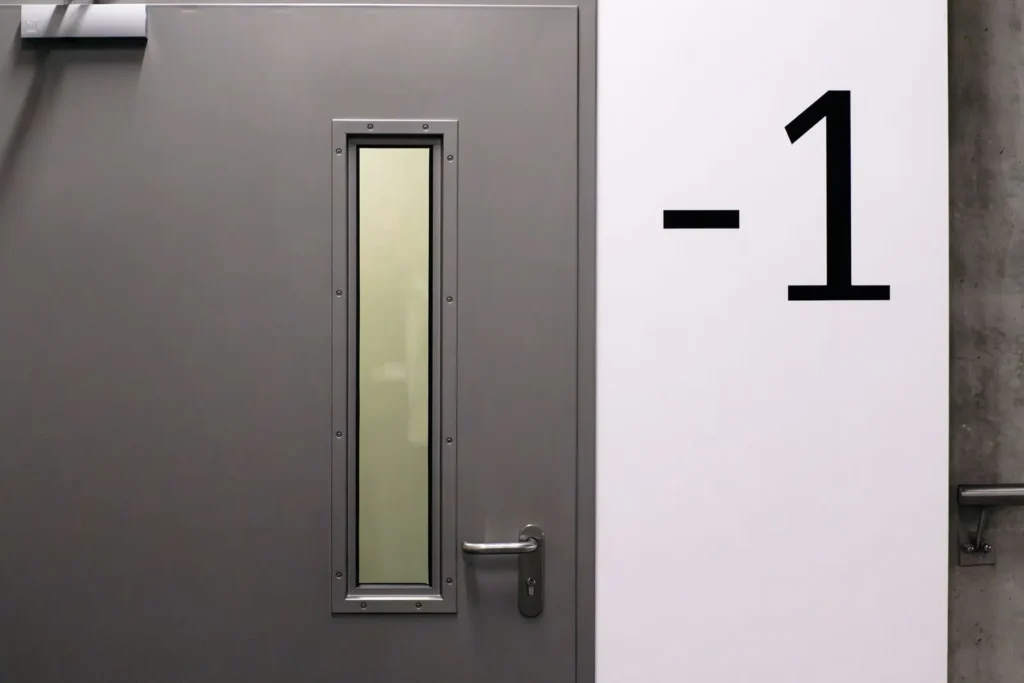
Inside a surface closer is a spring and a piston sitting in hydraulic fluid. Opening the door compresses the spring. As it closes, fluid is forced through small valves, and those valves set the speed. Sweep speed covers the main swing from open to within a few inches of the frame. Latch speed covers the last few inches, where the door has to overcome the latch.
Two more settings matter. Backcheck adds resistance as the door is thrown open past roughly seventy degrees, protecting the wall, the hinges and the closer arm. Spring power, or closer size, sets how hard the door pushes shut. Too little and the door will not latch against wind or air pressure. Too much and it is hard to open.
Closers drift with the seasons. Hydraulic fluid thickens in a St. Louis January and thins in a humid July, so a door set correctly in one can slam or stall in the other. An adjustment often fixes that. Oil on the closer body or on the floor beneath is different. It means the seals have failed and the closer needs replacing.