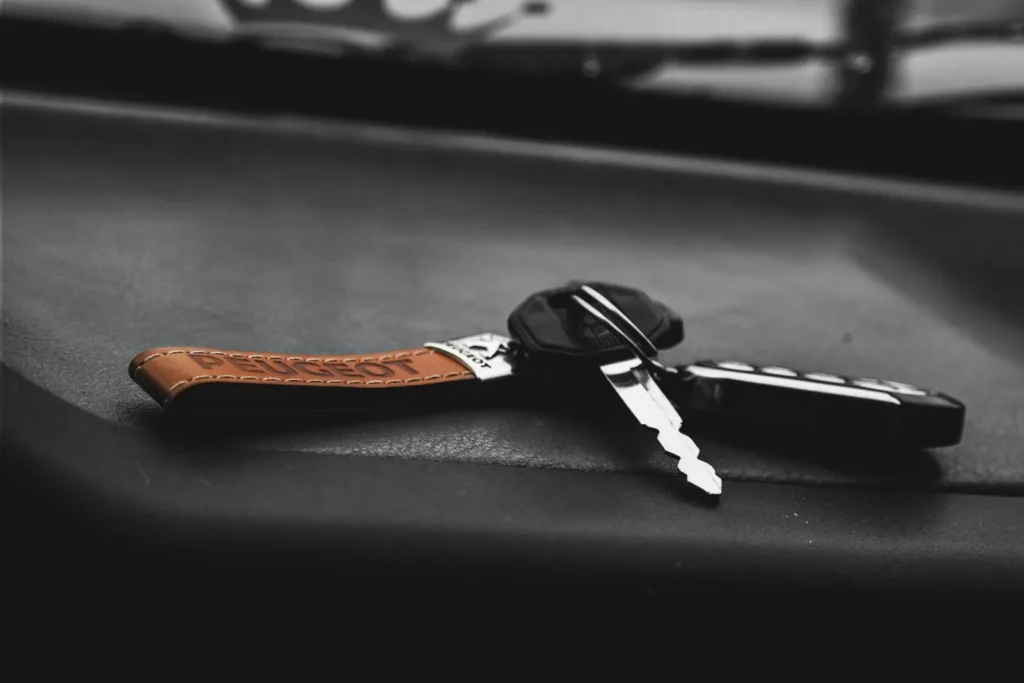
Inside the plastic head of most car keys made in the last few decades sits a transponder chip, a tiny glass or carbon capsule with no battery. When you turn the key, an antenna ring around the ignition cylinder energizes the chip and reads its code. The immobilizer compares that code with its stored list and only then allows fuel and spark.
Programming adds a new chip to that stored list. On most vehicles we connect a programmer to the OBD port, gain security access, and register the key. A second method is cloning, where the data from a working key is written onto a special chip so the car sees both keys as one. Cloning is quick, but it needs a working original.
Chip types differ by make and year. Early systems used a fixed code, later ones use encrypted exchanges that change with each start, and a key with the wrong chip family cannot be programmed at all. Our programmers cover most makes and models. Let us know your year, make and model and we will confirm before we come out.