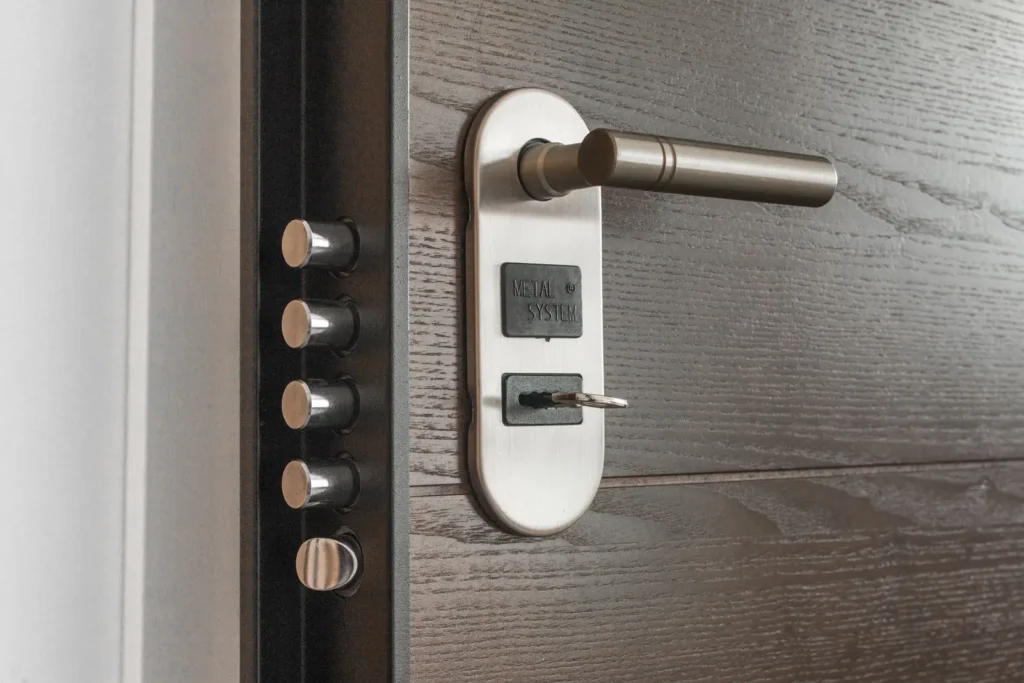
A standard pin tumbler cylinder has one row of pins and a keyway anyone can buy blanks for. High-security cylinders add a second locking mechanism, such as a sidebar, angled or rotating pins, finger pins or a sliding element in the key. Both mechanisms must be satisfied together, which makes picking and bumping far harder than on a conventional lock.
Drill resistance comes from hardened steel inserts and pins placed in front of the shear line and around the plug, which blunt or deflect a drill bit. Some cylinders also guard against pulling and wrenching. Brands such as Medeco, Mul-T-Lock, ASSA and Schlage Primus are well known examples on the market, and independent standards exist that grade cylinders on these attack tests.
Key control is often the bigger gain. A restricted keyway uses a key blank that is protected by patent or by contract and is not stocked on hardware store racks. Duplicates are cut only through controlled channels, for people named on an authorization record. For a business, that means the count of keys in circulation is a number you actually know.