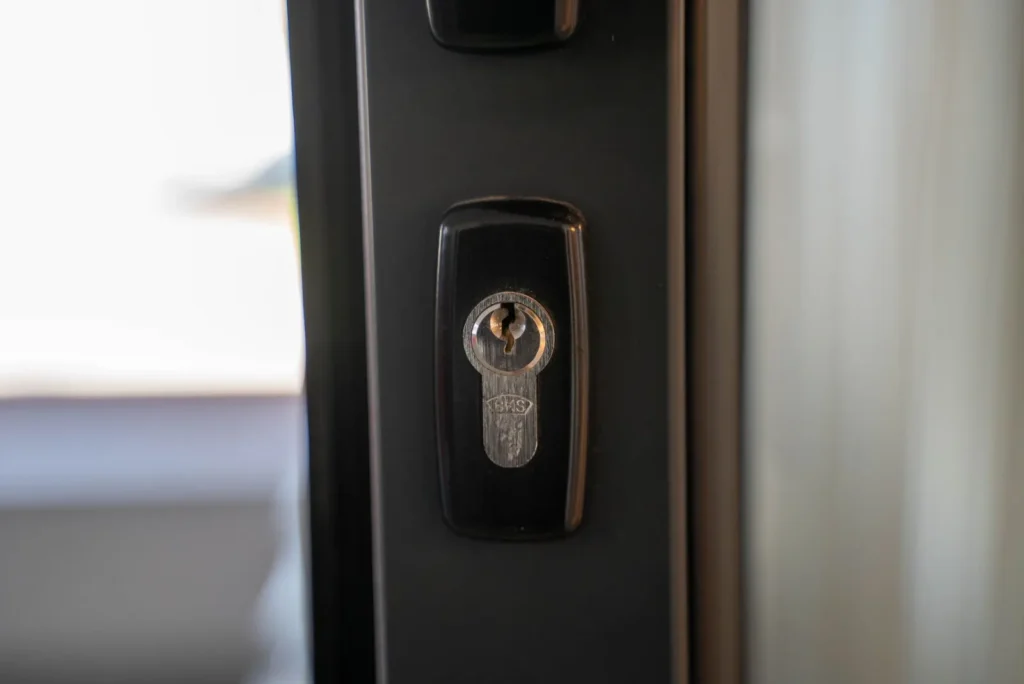
Replacement starts with what is already cut into the door. We measure the cross bore, the backset, the latch faceplate shape and the door thickness, then choose a lock that fits those dimensions. Most modern residential locks share a common preparation, so a like for like swap of a knob, lever or deadbolt is usually straightforward and needs no new drilling.
The frame gets the same attention. A new latch or bolt rarely lands in exactly the spot the old one did, so we refit the strike plate, and on exterior doors we anchor it with longer screws. We also look at the footprint of the old trim. If the previous lock left a ring of bare wood or old paint, we choose trim wide enough to cover it.
Older homes can be less simple. A door built around a mortise lock has a deep pocket in its edge and holes in places modern locks do not use. Replacing that with a cylindrical lock means filling or plating over the old preparation. Often a new mortise lock of the same size is the neater swap, and we will lay out both choices for your door.